Care communication technology
We build personalized voice, Korean-language check-ins, and caregiver reporting with original records, used with consent and clearly labeled as AI.
MemoryThread · Care communication · In development
MemoryThread is an AI-assisted communication service that helps people receiving care stay connected with their families and authorized caregivers. Starting from a guardian-voice TTS MVP evaluated and demonstrated in 2024, we are developing short Korean-language check-ins on a smart speaker and caregiver reporting.
Product
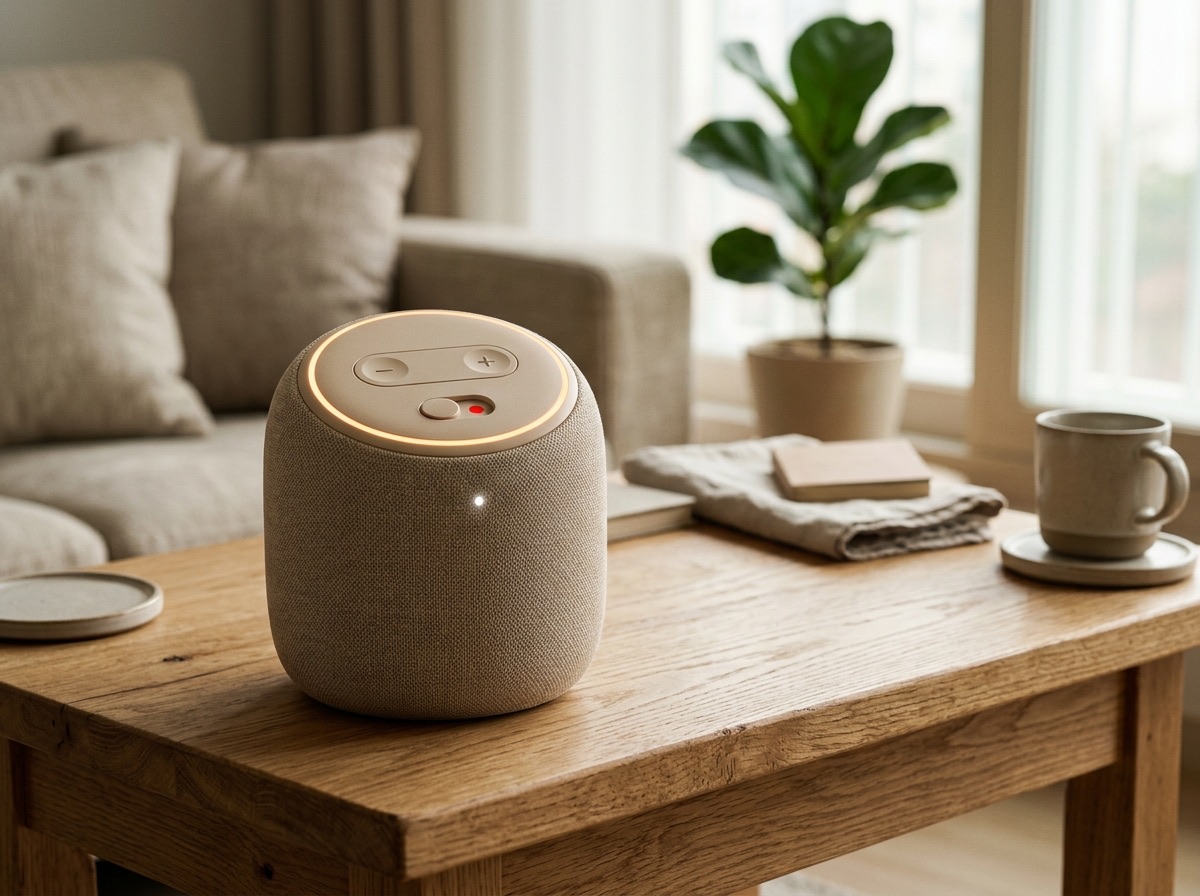
MemoryThread is an AI-assisted communication service designed to help people receiving care stay connected with their families and authorized caregivers. It responds to growing care needs in an aging society and to how hard it is for families to check in every day.
Building on a guardian-voice TTS MVP developed with support from South Korea’s Pre-Startup Package and evaluated and demonstrated in 2024, we are developing a smart-speaker-based service for short Korean-language check-ins and caregiver reporting.
Our planned system combines conversational AI agent interactions, on-device sound-event detection, and structured reports with original conversation transcripts. Authorized caregivers can review both the AI-generated summaries and their supporting records before deciding what to do next. An optional home camera will operate through a separate, consent-based photo-sharing process without routine AI image analysis.
MemoryThread is designed to support human care and judgment, not to replace medical diagnosis or professional emergency services.
Features
Apart from the guardian-voice TTS MVP, nothing below is offered as a service yet; each item is either in development or planned. Each item shows its current status.
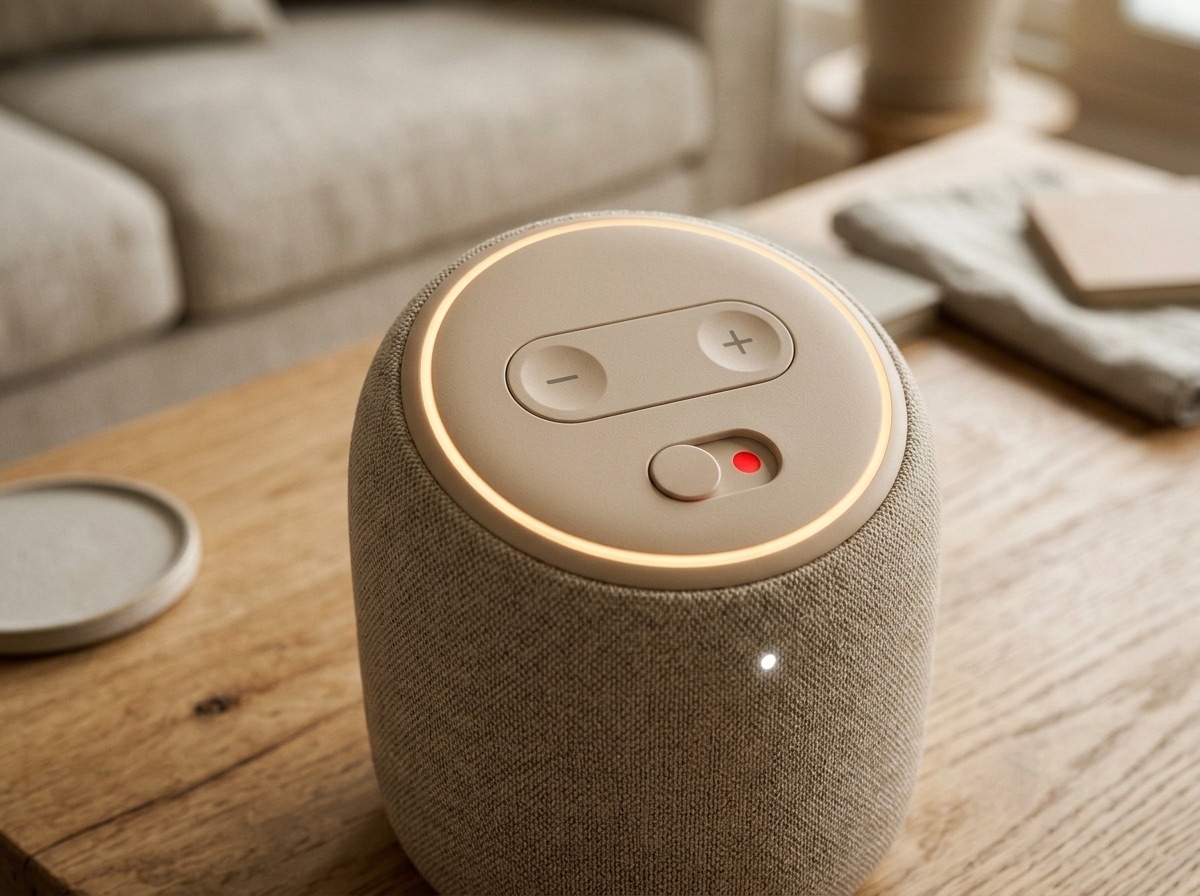
We plan to develop a speaker installed in the home of the person receiving care. It will hold short check-in conversations and play voice messages approved by guardians, and the user will always be able to switch the microphone off.
It is not designed as an always-recording device. While idle, it processes only the minimum signals needed on the device, and we will explain in advance when audio is sent to the server: scheduled check-ins, user requests, and permitted follow-up checks. Sending raw audio off the device would require a separate legal basis and consent.
익숙한 목소리로 전하는 메시지
With a guardian’s explicit consent and message approval, we generate personalized TTS speech. Only messages the guardian has approved are delivered in that guardian’s voice; general AI-generated conversation uses a separate AI voice. The personalized TTS MVP completed its final evaluation and demo in 2024; separating it from AI conversation is planned for the next product.
정기적인 AI 안부 확인
We are developing Korean-language AI conversations at scheduled times or on the user’s request. They focus on everyday topics such as meals, sleep, activity, mood, and help needed, never on diagnosis or treatment instructions. The conversational AI agent is used to run the conversation and organize what was said.
원본 기록을 확인할 수 있는 보고
We are building reports that pair the AI summary with the original conversation transcript and related event logs. Caregivers can check the evidence behind each summary and decide on follow-up themselves.
단말 기반 소리 감지
A lightweight model on the speaker can detect predefined sound events and try a follow-up check-in. Sound detection is not a definitive judgment of an accident or emergency and does not replace professional safety equipment.
선택형 홈 카메라
We are exploring delivery of camera photos to approved recipients, based on the user’s consent and separate permission settings. Photos are not used for AI analysis by default, and capture scope and retention are set separately.
The model looks for predefined types such as sounds that may be groaning, loud impacts, and alarm-like tones. Each result is treated as a sound candidate that needs checking, not as a finding that something happened.
When immediate danger such as fire is suspected, waiting for a conversation to finish could itself be risky, so we are considering a separate alert path for high-risk events. Sound alone cannot reliably identify a fire or emergency or guarantee a response, and this feature does not replace certified detectors or emergency services.
Reports & records
Caregivers should see not only a summary but also the original transcript and system events behind it. This reporting structure is in development and not yet offered as a service; the screen shown is an example built from fictional data.
Example screen · fictional data
Report created 09:01 · fictional user
Review statusNot yet reviewed
Optional camera
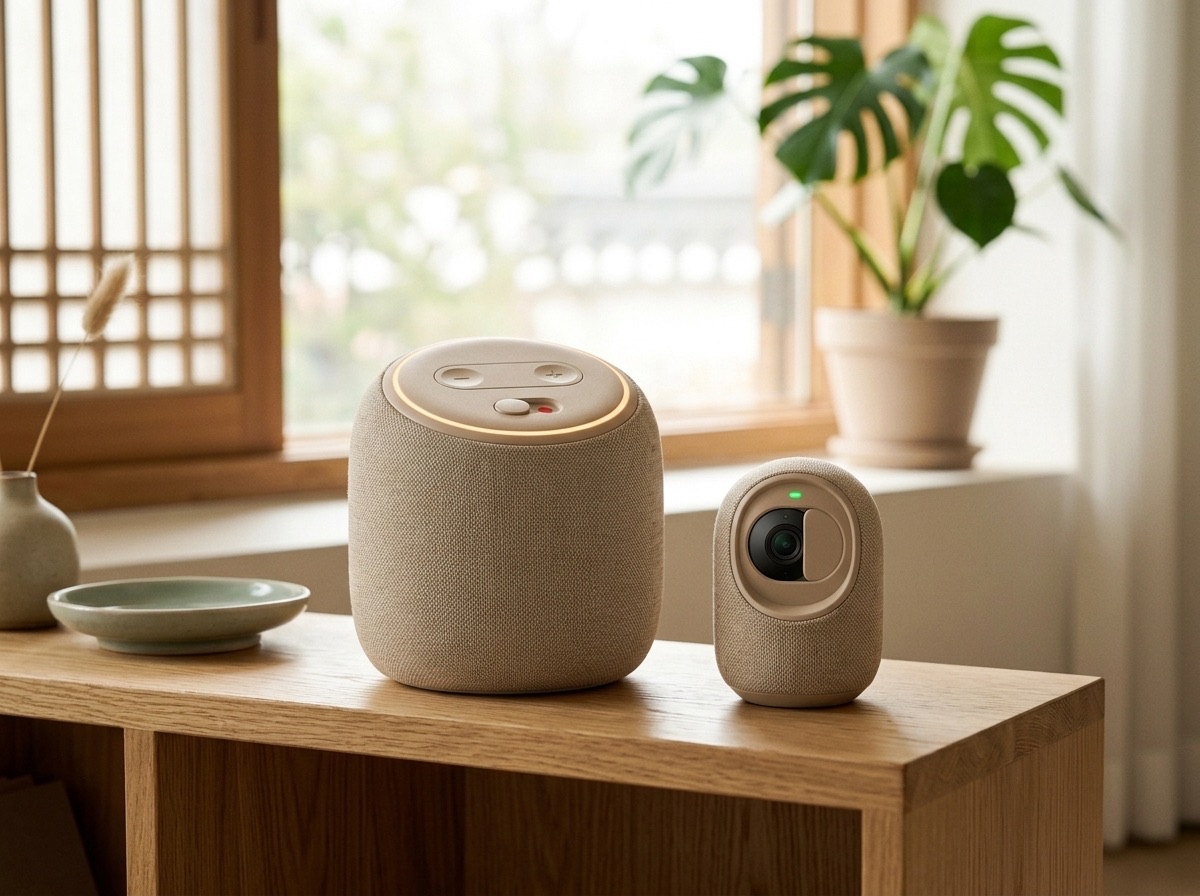
The camera is an optional accessory, not a requirement. Its aim is to send a limited number of photos so a caregiver can see how the user is doing when everyday check-ins are difficult. We will explore it as an additional development and integration step.
We are considering end-to-end encryption so the relay server cannot view original photos; it is not implemented yet. A camera in the home can also capture family members, visitors, and care workers, so their privacy is considered separately.
Voice & consent
We keep clear whose voice is speaking, who wrote the words, and who consented. These principles are design requirements for the next product; consent and notice procedures will be in place before the service is offered.
| Voice type | How it is spoken | Conditions |
|---|---|---|
| Messages written or approved by a guardian | Personalized TTS synthesized from that guardian’s voice | Explicit consent of the guardian who owns the voice, message approval, and notice that the voice is synthetic |
| Replies generated by the conversational AI agent | A separate, neutral AI voice | Notice that the reply is AI-generated, and user consent |
| Speech from the person receiving care | Speech recognition (STT) and conversation handling within the scope of consent | Only necessary information is processed, with restricted access |
Roadmap
We do not present the TTS MVP evaluated in 2024 as the same kind of achievement as the hardware and agent features we are now planning.
| Scope | Status | Notes |
|---|---|---|
| Personalized TTS from a guardian’s voice | MVP built & evaluated (2024) | MVP developed with Pre-Startup Package support; final evaluation and demo in 2024. |
| Claude via Claude Code and OpenRouter | Used in development & testing | Used for development and feature testing. Never offered as a service. |
| Direct Claude Console (API) integration | Planned for next prototype | Planned as the conversation and summary agent in the next prototype. |
| Smart speaker | Development goal | Microphone, speaker, physical mute, and status light |
| Scheduled AI check-ins and caregiver summaries | In development | Korean-language check-ins at set times or on request |
| Summaries with original transcripts | In development | Summary lines linked to statements and events |
| On-device sound detection with agent check | Follow-up goal | Follow-up check after a predefined sound candidate |
| Optional home camera | Follow-up goal | Limited photos over a separate, consented, secure path |
| Institutional connections | After legal & technical review | Phased in only after legal basis and technical requirements are confirmed. |
Team
Our founder’s grandmother lives in a care home, where her health has limited family visits. Through that, we saw first-hand how little contact families and the people they care for can keep.
Our founder’s aunt works as a certified care worker and has long shared how demanding care work is on the ground.
MemoryThread starts from both sides: families who cannot always be there, and care workers who are stretched thin.
Learned to develop and refine ideas over four years in a university startup club supported by KISED under the Ministry of SMEs and Startups.
In a patent strategy competition supported by the Korean Intellectual Property Office and a local government: eliminated in the preliminaries in year one, Excellence Award in year two, Grand Prize in year three. Also joined projects run with a patent firm.
Selected for a Ministry of SMEs and Startups startup internship program and learned how a startup runs by working inside one.
Selected for the Pre-Startup Package, began building the personalized TTS MVP, and founded AI VoiceMatch Service (에이아이보이스매치서비스) in June 2023.
Completed the final evaluation and demo of the personalized TTS MVP built with Pre-Startup Package support.
Technology
We build personalized voice, Korean-language check-ins, and caregiver reporting with original records, used with consent and clearly labeled as AI.
We build the systems that let AI agents and developer tools work with files, processes, models, and execution environments.
We implement and validate real problems and new ideas.
We design boundaries for execution, recovery, validation, and operation, beyond the prototype.
We develop validated work into an independent product or a reusable system.
Open source
Building MemoryThread depends on software foundations: connecting to AI models, a workspace for development, and control over the resources that work uses. We build these ourselves and publish the general-purpose parts as open source.
Open-source foundation
Extensible gateway software that maps different model APIs onto a shared Responses-style interface. Applications keep tool execution, approval, and conversation history.
In our workA common layer for connecting our services to different AI model APIs.
Open-source foundation
A workspace and execution layer that lets a coding agent inspect files, apply changes, and run commands. The agent plans the work. This project checks permissions and keeps execution state. It does not call a model or run an agent loop.
In our workThe workspace where coding agents help build our software, with permission checks on every change and command.
Open-source foundation
Foundation software for resource admission and execution policy on development workloads. The public work so far is the contract and authority core. It does not yet install a daemon, launch commands, or control operating-system resources.
In our workGroundwork for running our development workloads under clear resource policies.
Company
AI VoiceMatch Service (에이아이보이스매치서비스) is a software business founded in June 2023 as a sole proprietorship in Pyeongtaek, South Korea. We build MemoryThread (memorythread.app), a smart-speaker-based AI care communication service, along with the applied software and developer tools around it.
Contact
Questions about our technology or a possible collaboration can be sent by email.